statistics for business and economics 14th edition pdf
Overview of Statistics for Business and Economics, 14th Edition
This widely-used textbook provides a comprehensive introduction to statistical methods essential for students in business and economics.
Numerous online resources, including potential PDF access points like YakiBooki and Issuu, are frequently discussed by students seeking affordable options.
Reddit forums, such as r/USF, reveal student experiences with finding and sharing resources, while eBookmass offers direct download links for the global edition.
The 14th edition, alongside its 13th and 15th counterparts, remains a popular choice, with some students opting for scanning or renting due to cost.
Target Audience and Course Application
The 14th edition of Statistics for Business and Economics is primarily designed for undergraduate students enrolled in introductory business statistics courses. These courses are frequently a core requirement within business, economics, and related academic programs, such as finance, marketing, and accounting;
The textbook caters to students with varying mathematical backgrounds, offering a balance between conceptual understanding and practical application. It’s often utilized in courses emphasizing data analysis, decision-making, and quantitative problem-solving. Students actively seek PDF versions to facilitate convenient study, as evidenced by discussions on platforms like Reddit (r/USF), where accessibility and affordability are key concerns.
The content is structured to equip students with the skills to interpret and utilize statistical information effectively in real-world business scenarios. The availability of supplementary materials, like solutions manuals, further supports its application in coursework and independent learning, making the PDF format particularly desirable for efficient study.
Key Authors: McClave, Benson, and Sincich
James T. McClave, Terry S. Benson, and Kurt W. Sincich are the esteemed authors behind Statistics for Business and Economics, 14th Edition. Their combined expertise in statistics and business applications has established this textbook as a leading resource for students globally.
McClave, Benson, and Sincich are known for their clear and accessible writing style, making complex statistical concepts understandable for a broad range of learners. The consistent quality across editions contributes to the textbook’s enduring popularity, driving student searches for PDF versions to ensure convenient access to their established methodology.
Their collaborative approach ensures a comprehensive coverage of essential statistical techniques, frequently referenced in online discussions (like those found on Reddit) and resource-sharing platforms such as Issuu and YakiBooki, where students seek affordable access to their work.

Finding the 14th Edition PDF
Locating a PDF of Statistics for Business and Economics, 14th Edition, often involves exploring online platforms like Issuu, YakiBooki, and eBookmass, alongside Reddit discussions.
Legality and Ethical Considerations of PDF Downloads
Downloading PDF versions of copyrighted textbooks like Statistics for Business and Economics, 14th Edition, raises significant legal and ethical concerns. Unauthorized distribution and access violate copyright laws, potentially leading to legal repercussions for both the downloader and the distributor.
While students often seek affordable alternatives, obtaining a PDF through unofficial channels circumvents the author’s and publisher’s rights to compensation for their work. This impacts the future development of educational resources. Ethically, supporting legitimate avenues – such as purchasing the textbook, renting it, or utilizing library resources – demonstrates respect for intellectual property.
Furthermore, PDFs sourced from unverified websites may contain malware or viruses, posing a security risk to your device. Always prioritize legal and ethical access methods to ensure both your academic integrity and digital safety. Consider exploring official publisher options or licensed digital platforms.
Potential Sources for PDF Access (YakiBooki, Issuu, eBookmass)
Several online platforms are frequently mentioned in discussions regarding access to the Statistics for Business and Economics, 14th Edition PDF. YakiBooki appears as a recurring source, with users sharing links to downloadable versions, though the legitimacy of these links should be carefully evaluated.

Issuu hosts various documents, including uploads related to the textbook, often showcasing excerpts or potentially complete copies. eBookmass directly offers the textbook for download upon payment, specifically advertising the global edition. Reddit discussions, particularly on r/USF, often point users towards these sites.
However, it’s crucial to remember the legal and ethical considerations associated with downloading copyrighted material from these sources. While convenient, accessing PDFs through these platforms may infringe upon copyright laws. Always prioritize legitimate purchasing or rental options when available.
Reddit Discussions Regarding Free Access (r/USF)

The r/USF subreddit reveals a common student struggle: finding affordable access to the Statistics for Business and Economics, 14th Edition. Discussions frequently center around locating a free PDF version of the textbook, with users sharing experiences and potential leads.
Many students express frustration with the cost of the textbook and explore alternatives like renting or utilizing library resources, with one suggestion being to scan chapters during short library checkout periods. Links to platforms like YakiBooki are often shared, but with caveats regarding reliability and legality.
The sentiment highlights a need for accessible educational materials. While some users successfully find resources, others acknowledge the necessity of purchasing or renting the textbook. These conversations underscore the challenges students face in balancing academic needs with financial constraints.

Core Concepts Covered in the Textbook
The textbook comprehensively covers descriptive statistics, probability, and inferential statistics, equipping students with essential tools for data analysis and informed business decision-making.
Descriptive Statistics: Summarizing Data
This foundational section of Statistics for Business and Economics, 14th Edition focuses on methods for organizing, summarizing, and presenting data in a meaningful way. Students learn to calculate and interpret measures of central tendency – mean, median, and mode – providing insights into the typical values within a dataset.
Furthermore, the textbook details measures of dispersion, such as range, variance, and standard deviation, which quantify the spread or variability of the data. Graphical representations, including histograms, frequency polygons, and box plots, are emphasized to visually communicate data patterns and distributions.
Understanding these descriptive statistics is crucial as it forms the basis for more advanced statistical analyses discussed later in the text, and is frequently sought after by students accessing PDF versions online through platforms like Issuu and YakiBooki.
Probability and Probability Distributions
A core component of the Statistics for Business and Economics, 14th Edition, this section delves into the fundamental concepts of probability, essential for understanding risk and uncertainty in business decision-making. Students explore basic probability rules, conditional probability, and Bayes’ Theorem, building a foundation for statistical inference.
The textbook then introduces various probability distributions, including the binomial, Poisson, and normal distributions, detailing their characteristics and applications. Emphasis is placed on calculating probabilities associated with these distributions and utilizing them to model real-world phenomena.
Accessing resources like PDF versions, often discussed on Reddit (r/USF) and available through sites like eBookmass, allows students to reinforce these concepts and practice applying them to business scenarios, solidifying their understanding of statistical modeling.
Inferential Statistics: Estimation and Hypothesis Testing
The Statistics for Business and Economics, 14th Edition dedicates significant coverage to inferential statistics, empowering students to draw conclusions about populations based on sample data. This section focuses on point and interval estimation, teaching techniques to estimate population parameters with a defined level of confidence.
Hypothesis testing is thoroughly explained, covering the formulation of null and alternative hypotheses, the calculation of test statistics, and the interpretation of p-values. Students learn to apply these methods to various business problems, making informed decisions under uncertainty.
Students seeking accessible learning materials, including potential PDF versions discussed on platforms like Reddit and available via resources like Issuu, can enhance their grasp of these complex concepts and practice applying them to real-world business scenarios.

Specific Topics within the Textbook
The textbook delves into data collection, regression analysis, ANOVA, and correlation, offering practical applications frequently sought in downloadable PDF formats online.
Students utilize resources like YakiBooki and Issuu to access these core concepts.
Data Collection and Sampling Methods
The 14th edition of Statistics for Business and Economics dedicates significant attention to the foundational principles of data collection and sampling. It explores various methods for gathering data, emphasizing the importance of accurate and unbiased information for reliable statistical analysis.
Key topics include simple random sampling, stratified sampling, cluster sampling, and systematic sampling, alongside discussions on sample size determination and potential sampling errors. Students seeking PDF versions of the textbook often focus on these chapters for understanding how to design effective surveys and experiments.
The text highlights the crucial distinction between populations and samples, and the implications for generalizing findings. Online discussions, like those on Reddit (r/USF), reveal students utilizing these concepts when analyzing real-world business scenarios, often referencing downloadable resources from platforms like Issuu and YakiBooki to reinforce their learning.
Understanding these methods is paramount for informed decision-making in business and economics.
Regression Analysis and Correlation
A core component of the 14th edition of Statistics for Business and Economics is its comprehensive coverage of regression analysis and correlation techniques. The textbook meticulously explains simple linear regression, multiple regression, and methods for assessing the goodness of fit, including R-squared and adjusted R-squared.
Students utilizing PDF versions of the text, sourced from platforms like Issuu and eBookmass, often concentrate on these chapters to model relationships between variables and make predictions. The material details interpreting regression coefficients and conducting hypothesis tests related to regression parameters.
Correlation analysis, as a precursor to regression, is also thoroughly examined, with discussions on Pearson’s correlation coefficient and its limitations. Reddit discussions (r/USF) demonstrate students applying these concepts to real-world business data, frequently seeking supplemental materials alongside the textbook’s content.
Mastering these techniques is vital for predictive modeling.
Analysis of Variance (ANOVA)
The 14th edition of Statistics for Business and Economics dedicates significant attention to Analysis of Variance (ANOVA), a powerful statistical tool for comparing means across multiple groups. Students accessing the textbook in PDF format – often discussed on platforms like Reddit’s r/USF and available through sites like YakiBooki – will find detailed explanations of one-way and two-way ANOVA models.
The text emphasizes the underlying assumptions of ANOVA, including normality and homogeneity of variances, and outlines procedures for testing these assumptions. It also covers post-hoc tests, such as Tukey’s HSD, for determining which specific group means differ significantly.
Practical applications of ANOVA in business contexts, like comparing the effectiveness of different marketing campaigns, are illustrated. Resources like Issuu and eBookmass provide access to the material, aiding students in understanding and applying ANOVA techniques.
This is crucial for informed decision-making.

Supplementary Materials
Students seeking the 14th edition PDF often inquire about accompanying resources like solutions manuals and test banks, frequently discussed on Reddit and available through various online platforms.
These materials enhance learning and assessment.
Solutions Manual Availability
The availability of a solutions manual for the 14th edition of Statistics for Business and Economics is a frequent topic of discussion among students. Online forums, particularly Reddit threads like those found on r/USF, demonstrate a strong demand for this resource to aid in homework completion and understanding complex concepts.
While official solutions manuals are typically restricted to instructors, students often explore alternative avenues for access. Discussions reveal attempts to locate shared copies or purchase them through unofficial channels. The document promoting the 14th edition PDF download also mentions the availability of study guides and test banks alongside the textbook itself, hinting at potential bundled resources.
However, it’s crucial to acknowledge the ethical and legal implications of obtaining solutions manuals through unauthorized means. Legitimate access is generally granted to instructors for teaching purposes, ensuring academic integrity and proper assessment of student learning.
Test Bank Access for Instructors
A key component supporting the 14th edition of Statistics for Business and Economics is the accompanying test bank, designed exclusively for instructors. This resource provides a comprehensive collection of questions – multiple choice, true/false, and problem-solving – to assess student comprehension of the material. Access to the test bank is typically granted to verified educators through Pearson Education’s online platforms, requiring institutional credentials.
Discussions surrounding the textbook’s PDF version often indirectly mention the test bank, as students seek resources to prepare for assessments. The promotional document found online explicitly states that test banks are available alongside the textbook and study guides. However, unauthorized distribution or access to the test bank is strictly prohibited, upholding academic integrity.
Instructors utilize the test bank to create customized exams and quizzes, ensuring alignment with their specific course objectives and teaching style.
Study Guides and Online Resources
Supplementing the 14th edition of Statistics for Business and Economics are various study guides and online resources intended to enhance the learning experience. These materials aim to provide students with additional practice problems, detailed solutions, and conceptual explanations. The promotional document discovered online explicitly mentions the availability of study guides alongside the textbook PDF and test banks.
Students actively discussing the textbook on platforms like Reddit (r/USF) often inquire about supplementary materials to aid their understanding. While the focus is often on obtaining the textbook itself, the need for supporting resources is evident. Websites like YakiBooki and Issuu, frequently cited in searches for the PDF, may also host or link to related study aids.
Pearson Education’s website likely offers additional online resources for instructors and students.

Alternative Editions and Resources
The 13th and 15th editions exist as alternatives, while a global edition of the 14th is available via eBookmass, offering varied access points for students.
Comparison with the 13th and 15th Editions
Discussions surrounding the Statistics for Business and Economics textbook frequently involve comparisons between the 13th, 14th, and 15th editions. Students seeking PDF access often inquire about the usability of the 13th edition as a substitute, though some find it insufficient for their current coursework requirements;
While the 13th edition may contain similar core concepts, updates in data sets, examples, and potentially statistical software integration within the 14th and 15th editions can be crucial. The 15th edition, being the most recent, likely incorporates the latest advancements in statistical methodologies and real-world applications.
However, the availability of affordable access often drives students to explore older editions or seek PDF versions online, as evidenced by Reddit discussions. The choice depends on individual needs, course requirements, and budget constraints, with the 14th edition striking a balance between updated content and accessibility.
Global Edition Differences
The “Statistics for Business and Economics, 14th Edition” is also available as a Global Edition, and understanding the distinctions is vital for students seeking PDF access. Online sources, like eBookmass, specifically offer the Global Edition for download, indicating a separate product with potential variations.
These differences typically involve adjusted examples and case studies to reflect international business contexts, potentially altering the relevance for students in specific regions. The core statistical principles remain consistent, but the applied scenarios may differ significantly.
Cost can also be a factor, with the Global Edition sometimes offered at a lower price point; Students should verify with their instructors whether the Global Edition is suitable for their course before opting for a PDF download, ensuring alignment with assigned materials and assessments.
Practical Applications in Business and Economics
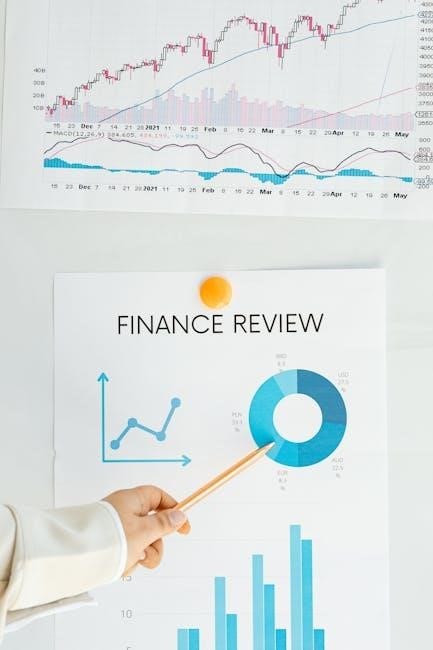
The textbook demonstrates how statistical analysis empowers informed decision-making in diverse fields like marketing, finance, and economic forecasting, utilizing real-world examples.
PDF access facilitates convenient study of these applications, enhancing understanding of statistical tools for practical business challenges.
Using Statistics in Marketing
The 14th edition of Statistics for Business and Economics equips marketers with crucial analytical tools. Understanding descriptive statistics allows for effective summarization of consumer data, revealing key trends and preferences. Probability and distributions are fundamental for forecasting market demand and assessing the likelihood of campaign success.
Inferential statistics, covered extensively in the text, enables marketers to draw conclusions about larger populations based on sample data, optimizing targeting strategies. Regression analysis, a core topic, helps determine the relationship between marketing spend and sales revenue. Accessing the textbook, potentially through PDF sources like YakiBooki or Issuu, provides a cost-effective way to master these techniques.
Students utilizing the book can analyze A/B testing results, measure advertising effectiveness, and segment customers for personalized marketing campaigns, ultimately maximizing return on investment.
Statistical Analysis in Finance
The 14th edition of Statistics for Business and Economics provides a robust foundation for financial analysts. Mastering descriptive statistics allows for clear summarization of market data, identifying trends in stock prices and economic indicators; Probability distributions are essential for modeling risk and return, crucial for investment decisions.
Inferential statistics, a key component of the textbook, enables analysts to make informed predictions about future market behavior based on historical data. Regression analysis helps determine relationships between economic variables and asset prices. Finding a PDF version through platforms like Issuu or eBookmass can offer accessible learning.
Analysts can utilize these techniques for portfolio optimization, risk management, and evaluating the performance of financial instruments, enhancing investment strategies.
Applications in Economic Forecasting
The 14th edition of Statistics for Business and Economics equips forecasters with vital tools. Descriptive statistics aid in summarizing key economic indicators like GDP, inflation, and unemployment rates, revealing patterns and trends. Probability distributions are fundamental for modeling uncertainty inherent in economic predictions.
Inferential statistics, covered extensively in the textbook, allows economists to draw conclusions about future economic conditions based on sample data. Regression analysis helps identify relationships between variables, predicting future values. Accessing a PDF copy via resources like YakiBooki or eBookmass can facilitate study.

These techniques are applied to forecast economic growth, predict recessions, and inform policy decisions, contributing to stable economic planning.